Wednesday, 9 May 2018

How can being tied to a culture be detrimental to an individual?

Being tied to a culture can be detrimental to an individual by affecting how they are treated by others. It could also be detrimental depending on what an individual may learn from being a part of that culture. Being tied to the native culture in Canada comes with discrimination and biases against them. The natives have been continuously pushed away, and taken from, since the beginning; all for the “benefit” of the Canadian economy. Thought, there have been many occasions, like the Oka Crisis, where these aboriginals have stood up for themselves and their culture to show they won’t stand for being treated this way anymore. In the documentary, The Oka Legacy, it tells different stories and perspectives of people who were personally, or indirectly impacted by the Oka Crisis in 1990.

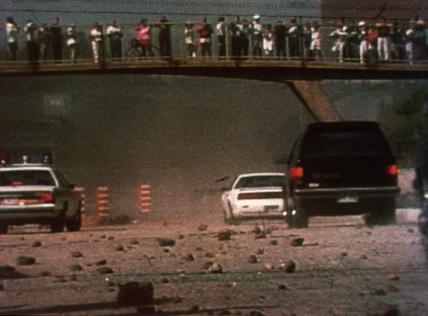
Image from "The Oka Legacy" documentary
The conflict of the Oka crisis was initiated from the plan to expand a golf course, and add condominiums, onto land that included Mohawk burial grounds. For a long time before this, the Mohawks from Kanesatake had tried to gain recognition from the government that the land belonged to them, yet they continued to be ignored (Marshall). These people already had land that they had claimed taken from them to build the golf course, and now there were plans to take more land from them. Through the years, land has been taken from and reassigned to Natives in Canada, pushing them further out and away from the growing economy of Canada. Unfortunately, this had become the norm for our culture to take from them and never give back because it was learnt in Canadian culture that the natives had no right to the things we were taking from them. This is detrimental to the native people to be treated in this way because it is disrespectful and it affects their way of life, and their relationships with other cultures. It could affect how they are treated, as it did with the people of Kanehsatake. When the people fought back and protested, they weren’t treated with respect or listened to their requests, and ultimately, they were threatened and abused by the police and military. This demonstrates how being tied to native culture can be detrimental to individuals because of the barriers presented to them from discrimination against them.

The Canadian First Nations filmmaker, Sonia Bonspille-Boileau (who directed “The Oka Legacy”), experienced a divide between two cultures. Her mother was a Mohawk, and her father was a French Canadian, so she felt in between both worlds. The discrimination of native culture was demonstrated throughout the film, though the story that stuck with me was one that Sonia shared about how much a last name mattered during the time of the conflict. There were police barricades that checked people entering the area where Sonia lived. When trying to enter her community, the people who had a Mohawk last name were given trouble and it was difficult to get through the police check. However, giving the police a french last name got them through with no problem, so Sonia used her fathers last name. This shows the difficulties that come with being tied to the native culture, and how she had to hide a part of herself to be accepted into her own community.

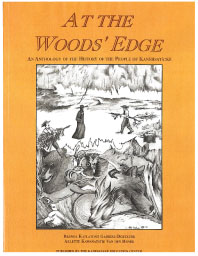
An anthology of the history of the people of Kanesatake
Being tied to a culture that has undergone cultural genocide is detrimental to a person's identity. Sonia experienced this in her childhood, as she shared in her documentary. The kids at her school were uncensored in their comments around her. She heard racist remarks, but she didn’t know how to correct them because she was clueless about her history. This is a result of the Native culture being stripped from the people, and the new generations feel a disconnect to it, but they don’t know why. To help her understand the history of her culture better, Sonia read a book called “At The Wood’s Edge”, written by Mohawk women from Kanehsatake. From reading this book, she gained an understanding of why her culture was being treated the way that it was, and she also felt more of a connection to it. Though there are many other individuals who still do not understand the history of their culture, or feel connected to it because it has been so distanced from them, which shows what sort of affect being tied to an oppressed culture has on an individual.

Photo © National Film Board of Canada
(Rocks at Whiskey Trench)

I think being part of the oppressing culture can be detrimental an individual as well because they are learning that it is okay to treat others as if they are less than them. They are learning an ethnocentric view, and that is unhealthy for them as individuals, and unfair those who they are oppressing. During the Oka Crisis, there were Mohawk people who were trying to escape the conflict, and while they were doing this, people were throwing rocks at their car, as shown in the documentary. These people throwing rocks seemed to believe that it was okay to abuse these Mohawk people, as the police did nothing to stop them. This tells the people what they are doing is not wrong because they were getting away with it while the police stood by and watched. The rock throwers didn’t understand the history of these natives because it was never taught to them, so they likely grew up treating them with disrespect as they have been for years. This demonstrates how being tied to the oppressing culture is detrimental, because the people a part of it are blinded by the hate and biases they have learned, and they refuse to recognize that these people do not deserve to be treated this way. The culture you are a part of affects the values you hold, so it is important to learn from other cultures to better your understanding and relationship with those individuals. This it not to say what these people did to the Mohawks, and how Natives have been treated, is justified; it is just to say that one culture oppressing another can be detrimental for individuals in each.


Overall, the events in the documentary “The Oka Legacy” demonstrate how being tied to a culture can be detrimental to an individual.

How being tied to a culture can be detrimental to a person

How being tied to a culture can be detrimental to a person?


Being tied to a culture could be detrimental to a person as seen in example of the Oka crisis. The Crisis shows how a person's culture and beliefs can be altered by something as simple as a dispute over a small plot of land.The Oka Crisis was a land dispute between a group of Mohawk people and the town of Oka, Quebec, Canada, which started on July 11, 1990 and lasted 78 days until September 26, 1990. The dispute was a conflict between First Nations and the Government over a piece of First Nations land that was to be destroyed and converted into an extension of the golf course. The tribe protecting the land rebelled and fought back to try to prevent their land from being taken away. However in the end the Mohawk people lost their land after a fight ending in a standoff with local authorities. The loss of their land impacted the way they were seen by others, and it was a personal detrimental loss in terms of their culture. In regards to a person in the Mohawk culture the loss of land is like a loss of a piece of their culture that they will have to live without for the rest of their lives. On the other hand in some ways the Oka Crisis also had a positive impact on First Nations people because it pushed them to speak out and act toward change and equality. Which lead to a walk of the Quebecois and Mohawk tribes to put a posture of peace and singularity between the two cultures.The Oka Crisis not only had impacts on Mohawk society and the town of Oka, but it also had detrimental effects on individuals who were on either side of the dispute. These people were torn between the two cultures, the Quebecois and the Mohawk people, and because of this, they were likely to be hurt. An example of a person in this circumstance is Sonia Bonspille-Boileau, the Mohawk filmer who had a Quebecois father and a Mohawk mother. Sonia felt that she was torn between the two cultures and asked to choose a side. “I grew up smack in the middle of two worlds. My father is a Quebecois from Oka and my mother is Mohawk. I never really felt as though I was caught between two worlds until the media slammed it in my face during the Oka Crisis of 1990. It's as if I was asked to choose one side and hate the other” (Sonia Bonspille-boileau in 8th fire, CBC). Sonia recalls the time of the Oka Crisis when her mother and father were on opposing sides and she was forced to pick between them. Her mother and father each within their own cultures were unable to come together because of the different beliefs within the cultures. Which was detrimental to Sonia as she herself was conflicted on picking a side. In conclusion, In my opinion I believe that being part of culture does impact people and their lives in both good and bad ways. The Oka Crisis is an example of how being part of a culture can have detrimental effects, although there are many more events and stories that show how a person’s culture can be detrimental to them, I believe this  holds stature due to how close to home it is.


How can being tied to a culture be detrimental to an individual?

How can being tied to a culture be detrimental to an individual?

Being tied to a culture can be detrimental to a person when the culture is not accepted by the people around you. The discrimination of people because of where they’re from causes loss of culture. Some try to force cultures to be forgotten. For example, the Aboriginal culture. The Aboriginal culture has been tested too many times in the past. They have endured having their land taken away from them, residential schools, colonization roads, the Oka Crisis, and many more.

In my opinion, every culture should be treated as equal. The Aboriginal peoples are just one of many cultures that aren’t given the respect of being treated equally. To make the people around them more accepting of them, they aren’t even able to use their own names. One woman uses a French Canadian name over her Mohawk name to avoid the great possibility of being treated without respect by people with power around them, police officers for example, or even just people that aren’t a part of their culture.

One of the biggest things to impact Aboriginal culture was the Oka Crisis. The Oka Crisis was a 78 day standoff between the Mohawk people and the town of Oka in Quebec. It started when the people of Oka tried to expand a golf course over Mohawk land, which included a Mohawk burial ground. The Mohawk people retaliated and blocked off the highway through their community to the golf course. What they called “war” broke out in the Mohawk community and contained gunfire and teargas. It resulted in the death of an officer, Corporal Marcel Lemay, which resulted in the SQ retreating.
Image result for oka crisis
https://www.huffingtonpost.ca/2016/10/23/colonization-road-ryan-mcmahon-michelle-stjohn_n_12562738.html

Two sisters fought for their lives during the crisis, the older sister trying to help her younger sister flee to safety. The officers took the situation too far, stabbing the older sister in the chest with the end of his gun. If he had have stabbed her a centimeter any way, she would have died. When all of this was “finished”, the people of the Mohawk community tried fleeing, but on their way out, the people of Oka threw rocks at their cars, injuring many, including small children. While all of this was happening, the Oka police stood by and watched the Mohawk people be attacked.

Colonization had impacted the way the Aboriginal culture grew over the years after the Europeans stole their land and made it their own. When colonization started, the native land was stolen and given to settlers to make lives for themselves. Treaties were signed between the Aboriginal peoples and the settlers and were placed as laws, but the government did not follow the laws they had placed. The government decided that if the native peoples did not use their land “productively”, meaning how they wanted it to be used, they would take it from them and use it for whatever they thought was right. Roads were built over these lands that were stolen that they called “Colonization Road”. They were built all over Canada and many of them turned into roads that we use today, many of which are around where we call cottage country.
Image result for colonization roads
https://www.huffingtonpost.ca/2016/10/23/colonization-road-ryan-mcmahon-michelle-stjohn_n_12562738.html

One community that was isolated from the rest of civilization had tried to build a road out of their community so that they were no longer isolated there. They wanted to call this “Freedom Road” as it would lead to their freedom of isolation, but the government had repeatedly denied them the ability to build this road. There had been many instances, including a man who needed an ambulance to make it to a hospital, that people could not make it to or from this community in emergencies.

In my opinion, I believe that the Aboriginal peoples have been treated extremely unfairly and their culture should be left alone and should have been from the start. The settlers that came and took over the land of the people already residing there just living their lives how they were taught and how they felt was the right was for them were greedy and should have found places that were not already being used, even if it was for a purpose they did not agree with. The Aboriginal people being tied to their culture can be detrimental to their lives because they aren’t able to show their culture of what they believe in without the rest of the population looking down on them and telling them what to do. This was proved by the Oka Crisis and how the Mohawk people were only standing up for what they believed in only to be met with war and angry citizens of a town who didn’t even own the land they wanted to build on to begin with. Their land was theirs from the start and the European settlers should not have taken them over to build the Colonization Roads over them.

How being tied to a culture can be detrimental to a person

I believe that being tied to a culture can be detrimental to a person in many different ways. In colonization road, the roads and railways that Canada built across indigenous territory was like an infection that kept spreading across their land. Since they were so tied to their culture it harmed their way of thinking and their way of living since these roads were being planted across the land they had always called home. In The Oka Legacy, the indigenous land was taken away from the indigenous peoples in order to build a golf course over their sacred burial ground, also causing trauma to their lives and home environments. Colonization Road touches on how the indigenous lives are forever changed because of these roads implanted on their territories by “rich and famous white [people] who get roads named after them”. A lot of the saddening part is that some people lived and played on these roads and never knew it signified something that was against their heritage, something that took away their rights as settlers for finding land and claiming it, giving people of the “founded” land immense trauma and confusion as to why they deserve to be treated like they were not a part of the country let  alone the original founders of it. The Oka Legacy focuses more on the taking land aspect rather than forgetting and not caring about land. The indigenous peoples fought for the golf course to not be expanded because of their sacred burial grounds that lay beneath the targeted building proposal. Not only did this cause a lot of upset and confused feelings from the indigenous, but it made them angry and needed to do something to prove that they were fighting. In turn, they blocked off the bridge leading to the golf course, nobody could come in and nobody could come out. In response to this protective act, the police launched tear gas to kill off the soldiers who were protecting their land. The Oka Legacy is a legacy that will move on for generations and generations because of the heroic and protective acts from the indigenous soldiers who lost their lives over their sacred land. This crisis that happened in 1990 shaped indigenous peoples in Quebec who lived in and around the targeted land, and while they were fleeing to safety they were still targeted just for being who they were and because they were coming from the land that they kept fighting for. I would imagine that being told I couldn’t fight for what I wanted because my opinion doesn’t matter would be pretty traumatic and that further proves the point that being tied to a culture can be very detrimental to a person. If those people hadn’t been tied to their indigenous culture and their indigenous land, they wouldn’t have had the unfortunate events of the crisis in the first place. While something like land may not be a very big deal to most of us Canadians now, it is a very big deal in some people’s lives. I hate to hear about all of the tragedies that happen to our first nations people because they are people just as much as we, the majority, are. They deserve the same respect we give to everyone else and unfortunately just the fact that they are tied to their own culture and heritage is making the majority of our country see them as lesser, giving them less than they deserve and permanently harming their decisions and opinions about themselves.

How Being Tied to a Culture Can Be Beneficial/Detrimental

The “Colonization Road” and ‘The Oka Legacy” documentaries provide contrasting evidence of how being tied to a culture affects a person. In “Colonization Road”, being tied to a culture is detrimental to people, whereas in “The Oka Legacy”, it has a more positive affect in the long run.

Being tied to a culture negatively affects Indigenous people in Colonization Road. The colonization of western Canada resulted in the destruction of Indigenous land and culture. Because of their cultural identity, Indigenous peoples were subject to many acts by the settlers that were detrimental to them. They were aggressively displaced from their lands, in part to make way for colonization roads to the west, but also for resource extraction. They signed treaties, and were made to live on less than substantial reserves. As their culture was not accepted, their children were forced to attend residential schools in an attempt to enforce European culture. Over the generations, the culture of Indigenous people was greatly lost. Even though colonization and residential schools are a thing of the past in Canada, Indigenous people still live with the effects today. Though the children and youth of this generation may not have experienced the destruction caused by colonization, they remain exposed to the hardships due to their cultural ties. According to the CBC, a recent study found that 60% of First Nation children on reserves live in poverty, the highest provincial rates being Manitoba (76%) and Saskatchewan (69%). Other disadvantages include lower income, higher unemployment, and lower levels of education. In fact, children First Nation children on reserves receive 30% less education funding for education than children outside of reserves. For Indigenous children, these problems have become an inherent part of their lives for simply being of their culture.
To make matters worse, reconciliation between Canada and its First Nations is not easily achieved. In the documentary, reconciliation efforts were described as Canada asking for forgiveness without physically doing anything to fix the problem; as if they are just asking First Nations to accept the apology and move on. Until sufficient action is taken towards reconciliation, these detrimental problems will continue for Indigenous people.

In “The Oka Legacy” documentary, being tied to a culture has a more positive aspect. The Oka Crisis was a standoff between Mohawk people and the town of Oka, Quebec, along with police and armed forces, over the proposed expansion of a local golf course onto sacred Mohawk land. After a tense 78 day standoff at barricaded roads, a deal was reached between the two sides that would cancel the construction of the golf course if the barricades came down. The events of the crisis were terrifying for many Mohawk people, especially those who unintentionally got caught up in the conflict. In the middle of a crowd, carrying her young sister, Waneek Horn-Miller was stabbed close to the heart with a soldier’s bayonet and was lucky to survive. The crisis had a profound effect on her. Initially, she let it bring her down, but in the aftermath, she was determined to prove that the events of the crisis had strengthened her, rather than beaten her. She became an olympic athlete in water polo, and an activist for Indigenous rights. Waneek and Aboriginals across the country felt great pride that their people had taken a stand and shown they would not let their land be taken any longer. The event was a rallying cry and an inspiration for all Indigenous people in Canada, and it raised national awareness of land claims and the controversy surrounding them. Being tied to a culture was beneficial to the Indigenous community in this case, as it was a time of change and hope for their people all across the country.


http://www.cbc.ca/firsthand/episodes/colonization-road
https://www.eyeoncanada.ca/film/details/the-oka-crisis-legacy

Oka Crisis

In the documentary The Oka Legacy they were talking about how being tied to a culture can hurt you, but at the same time can make you stronger as a community. On July 11- September 26, 1990 there was a 78 day standoff between the Mohawk protesters, the police, and the army. This occurred because they wanted to expand a golf course and make it 18 holes. This expansion would go onto what the Mohawk believed to be an ancient burial ground. This debate between the Mohawk and the police created an example for the rest of Canada that being in a culture can hurt you and benefit you at the same time.

  During the Oka crisis, the Mohawk people united to defend what they believed to be an ancient burial ground. Being tied to their culture and their land created some consequences as 1 Mohawk elder was killed, 100 charged, and 75+ were injured. They didn’t have to be hurt but they were tied to a culture that they strongly believed in. This hurt them as a culture and as a community. The Oka crisis did also help them as a culture because they stood up to the Canadian army and defended what they believed in and won. The crisis ended with the Mohawk surrendering to the army and the golf course expansion canceled. You can look at this crisis in one of two ways. The first way of looking at it is that it strengthened the culture by showing that they can accomplish anything that they believe in as a group. Proving that the Oka crisis made the Mohawk people stronger as a culture. The second way of looking at the Oka crisis is that being a part of that culture can hurt you. If the people that were injured were not a part of that culture, they would not have been harmed. The Mohawk elder wouldn’t have died if he wasn’t a part of that culture. That being said, if the Mohawk people did not defend their land then they would just be weaker as a whole. I think that this can be a good example for other cultures. It shows others that if you are in a culture, you can be stronger if you fight for what you believe in as a community. It also shows that there are consequences to being a part of your community. In the end, I think that being in a community can make you stronger rather than hurt you.  

If this crisis did not happen, cultures such as the Mohawk people would not be able to show how strong they are. In the end it seemed to be a victory for the Mohawk people because their land was protected by their actions. This crisis also reveals how our government does not respect other cultures and their beliefs. This incident showed the government that there are consequences to their actions against other cultures. This incident might have stopped other possible disputes over land or power between groups or cultures.     


How Being Tied to a Culture can be Helpful to an Individual

The Oka Legacy is a documentary representing how people, their communities, and culture, bring everyone together. It helps the younger kids in the community grow and feel part of a bigger family, with others around them supporting them and their beliefs. Being tied to a culture helps an individual grow with more support and positivity around them. The Oka Legacy is a good representation of how this works, especially through all the violence and fighting.

The small town of Kanehsatake, located in quebec, is populated by many aboriginal people who are part of the Mohawk tribe. Being a young kid, and growing up in such an environment and structure that the Mohawk people believe in, can really help an individual grow. They get to grow up learning from not only their parents and siblings, but also the elders and chief of the people. This is an environment where everyone believes in the same system, beliefs, religion, and share the same music and dances. This really helps someone who’s young, feel tied to a culture and part of a bigger family. Everyone knows everyone in these types of communities and that gives the opportunity for everyone to learn from each other and feel welcomed and wanted. For young children, cultural identity is extremely important for even their mental health and wellbeing. Having a good sense of their peoples history and traditions can go a long way in developing a young child. This is because it gives them a good sense of belonging and  good self esteem that supports their overall wellbeing.

Young children need to be able to know and define their own identity, and nothing develops that better than being a part of a tightly knitted community. The reason a small community is so good at raising a child, is because everyone has a part in it, and it is the most important thing to them. The most important thing to a community is the children. Elders, parents and adults will keep the children safe at all costs, because they are the future of their people. So to develop their beliefs and help them realize their own self and identity early impacts not only the child, but the future of their people.   

Being involved in a culture like the Mohawk people, can make people feel as one. When the Mohawk people fought back against a golf course being extended into their land, they fought the decision together, and eventually overcame it. This united aboriginals all over the country who have been fighting the government for hundreds of years, for their land and resources that were rightfully theirs. Being tied to a culture or community like this, where everyone fights for eachother and protects each other like they were family can help them feel safe. For someone part of a culture like this, it sets a good example and gives them hope for their own community. It allows them to feel part of something bigger, and fight against the government who's been taking their land for hundreds of years. So for someone to be apart of that it gives them role models and others to look up to. It inspires individuals to rise up and take action, and to help them find themselves and who they are.

A culture doesn’t have to be defined by racial or ethnic background. It can be identified by where a person’s heart sits, or where they feel the most understood or the best sense of belonging, and being apart of a culture like this allows one to do so. We can even relate this to other smaller cultures. Like those who like a certain type of music or those who like a certain sport or sports team. Even though not everyone knows each other, they will still respect and help each other because they have the same beliefs. They will stick up for one another. When people share the same culture and beliefs, it becomes easier to talk to, heal with, and relate to them.
How can being tied to a culture be detrimental to an individual?

Based on the movie “Colonization Road” I feel like the Indigenous people have been done wrong the European and American societies because of the actual roads that they made. Treaties have been made that puts only one part of the country in advantage and it isn’t the Indigenous people. All and all, the the Indigenous people have the right to feel disrespected and they have the right to say that being of that race is detrimental for someone.
First of all, building the roads was a great idea for the newcomers, but for the people actually living there at the moment, it meant the start of a new era and the destruction of their land and, their own era. The reason they made those roads was to attract a new society and immigrants. It only made it easier that it was free or nearly free to build since very few people actually lived there. The second reason why the European decided to attack that region was because of the actual resources there. The Indigenous people were proud to call that region there’s because of the abundant fish and easy access to water due to near river
This greed by the European people impacted the Indigenous in many ways. One of them was by including new activities such as mining, logging, and farming because it would hurt the growing Indigenous ecosystem and the fishing, which the Anishinaabeg really depend on. This was terrible in the short and long run for the Indigenous because they themselves were using them, which gave the American incentive to keep building other colonization roads
Today, these roads run through what is now called the cottage country. Also, today some of the roads are now used to go hiking and cycling and some were improved into modern highway standards. Some of the roads that were built separate Quebec and Ontario today. The fact that they were built during the American Revolution proved that they wanted to turn the forests into farmland because they believed in it for the long run.
I feel like the being tied to the Indigenous race puts you automatically in a disadvantage because the system was originally designed for them to give up what was there’s to greet the immigrants that we call today’s Canadians. Today’s Indigenous feel like something has been stolen from them and it’s mainly because of the roads.It affected their population’s growth because they couldn’t fish anymore or do any of their rituals or activities. Also, they have been stripped of many important things such as the education, their ecosystem and their health care that have had a major impact on their growth.


How can being attached to a community be detrimental to a person By Jack parsons


                            How can being tied to a culture be detrimental to a person?


                                   Is it the governments fault? the aboriginals? or both? 

Image result for the oka crisis We all grow up with different interests some that may seem normal to others, or some that may seem weird just because that not the way we were raised. Obviously things were different many years ago and things change, but for the Mohawks keeping things close to the way they were before is how they felt it should be done. But unfortunately this was seen as wrong by many people including the Canadian government.  This caused a huge controversy which began on July 11th 1990 and went on for 78 days. This started because the town of Oka wanted to expand a golf course on to the land of the Mohawk people. Most people would think okay it's just a little bit of land what's the matter, but for the Mohawks it was more than just a little bit of land. The problem was the government had treaties that stated this was aboriginal land and was to be untouched. So was the government essentially breaking their own laws ? For the Mohawk people this land means so much more to them than most people think because it helps them stay in touch with the past and their culture, but this ended up being seriously detrimental to the Mohawk people. There town was raided people were being hit,attacked, stabbed anything to get them off the land. “Surrender or else” was the words of the words of the government all because the aboriginal people closed the bridge. All of these threats just because there land or culture does not seem important to the Canadian government. This can even relate way back to residential schools, these kids were just taken from there families because of how they were raised or what their beliefs were. This is a

Image result for first nations reserves
great example of how them being tied to their culture could be detrimental, but can they be blamed for all of it? There culture is seen as wrong by so many people just because they are different. But another way that it can not only be detrimental to one person but even a whole community is the fact that they can have parts of their culture with them but not on the reserve. The fact is that the first nations reserves we have around Canada are horrible, the houses are tiny, there are no stores, everything is so expensive and it’s just not somewhere anyone should deserve to live. There is just a point where the first nations should be able to make the decision where a healthy lifestyle should be more important than your culture. Overall you can see that it is a  mix of problems from the government, but also the aboriginals are apart of the problem as well. Both sides have ways that they can improve the situation, but it's gonna take cooperation from both of them to fix it.


How Culture can be detrimental

The Oka Legacy

Being tied to a culture can be detrimental because different situations can occur. In this situation, The Oka crisis was detrimental to the mohawk people and the Canadian Government. The battle between the two started July 11, 1990 and lasted 78 days right up until September 26, 1990. The battle was over a piece of first nation land that the Canadian Government wanted to claim and turn/extend into a golf course. Obviously the First Nations people fought against this idea leading them to rebel and protect their land, this caused a massive fight to break out leaving many dead and injured. This is detrimental because the Mohawk people lost their land in the end leaving them to travel to somewhere else. Another reason that this situation is detrimental is because not only did they lose a piece of land, they also lost a piece of their culture and the way Canadian citizens looked at them. First Nations people were strongly hated by Canadians at this time, for example as the Mohawk people attempted to cross the freedom bridge to move away, crowds of Canadian people stood watching, cheering, and also many were throwing large rocks at the cars trying to injure and scare them away for good.  I believe that being tied to a culture can be detrimental, but also in a way very helpful because if everyone sticks together and fights for their beliefs, they can take action and make a difference. After the crisis was finished, it left many Mohawk people feeling a lot of different emotions, but also inspired many in a way, a way that would help them become stronger as a culture. First Nations people and the Canadian Government have not always got along together, a good example of this is residential schools. First Nations people were sent to these schools when they were little. Residential schools were government-sponsored and were created to strip the native religion out of the first nation children, seperate them from their families and homes, and also take away their traditions. This relates to cultures being detrimental because if you were native, your religion was thought to be unequal and interfiorial. Native and indigenous people have been faced with challenges their entire life and continue to be, but as time went on they have learned to come together and fight for equality. Many adults involved in the Oka Crisis were not only fighting for their cultures rights, but also for their children's, so their children would not have to go through this as they grew old. The Oka Crisis may only sound like they were robbed of a piece of their land, but in my opinion it was much more than that, Mohawk people and First Nations people were  being attacked because of their culture and religion, but showed that they were relentless and had great perseverance to continue to believe in their culture and fight for their rights.

Tuesday, 8 May 2018

How Being Tied to a Culture can be Detrimental to a Person

I believe being tied to a culture CAN be detrimental to a person, and the Oka Crisis is a good example of this. The Crisis demonstrates how a person's culture and beliefs can be torn apart by something as simple as a dispute over a parcel of land.

The Oka Crisis was a land dispute between a group of Mohawk people and the town of Oka, Quebec, Canada, which began on July 11, 1990 and lasted 78 days until September 26, 1990. The dispute was a violent conflict between First Nations and the Canadian Government over a piece of First Nation's land that was to be developed into a golf course. The tribe protecting the land rebelled and fought back to try to prevent their land from being taken away.

However, in the end, the Mohawk people lost their land after a standoff with local authorities. The loss of their land impacted the way they were seen by Canadians, and it was a personal and detrimental loss in terms of their culture. In regards to a person in the Mohawk culture, the loss of land is like a loss of a piece of their culture, that they will have to live without for the rest of their lives. On the other hand, in some ways, the Oka Crisis also had a positive impact on First Nations people because it inspired them to speak out and acted as a movement toward change and equality.

The Oka Crisis not only had impacts on Mohawk society and the town of Oka, but it also had detrimental effects on individuals who were on neither side of the dispute. These individuals were torn between the two cultures, the French Canadians and the Mohawk people, and because of this, they were likely to be hurt. An example of a person in this circumstance is Sonia Bonspille-Boileau, the Mohawk filmmaker who had a French Canadian father and a Mohawk mother. Sonia felt as though she was torn between the two cultures and asked to choose a side. “I grew up smack in the middle of two worlds. My father is a Quebecois from Oka and my mother is Mohawk. I never really felt as though I was caught between two worlds until the media slammed it in my face during the Oka Crisis of 1990. It's as if I was asked to choose one side and hate the other” (Sonia Bonspille-boileau in 8th fire, CBC). Sonia recalls the time of the Oka Crisis when her mother and father were on opposing sides and she was forced to pick between them. Her mother and father, each tied to their own cultures, were unable to come together as a family because of the different beliefs within the cultures, which was ultimately detrimental to Sonia as she herself has expressed.

In conclusion, I believe that being tied to a culture does impact people and their daily lives in both good and bad ways. The Oka Crisis is one example of how being tied to a culture can have detrimental effects, although there are many more events and stories, similar to Sonia’s, that show how a person’s culture is detrimental to them.


https://www.google.ca/search?q=sonia+bonspille+boileau&source=lnms&tbm=isch&sa=X&ved=0ahUKEwi6rrbosffaAhVJpFkKHcx9CAsQ_AUICigB&biw=1920&bih=974#imgrc=o-4teJj_z-LYiM:


Link to Sonia’s story


Oka Crisis


https://www.google.ca/search?q=oka+crisis&source=lnms&tbm=isch&sa=X&ved=0ahUKEwjsyK-ssvfaAhVSwVkKHYWKCiIQ_AUICigB&biw=1920&bih=974#imgdii=b8sep9uSvlsVpM:&imgrc=gBycLs0vA0fTWM:

Lack Of Support From Canadian Government Leads To Cultural Genocide


Lack Of Support From Canadian Government Leads To Cultural Genocide
By Aaron Goodison


Being tied to a culture can be detrimental to a person due to politics, especially when it’s
Canada’s first nation citizens dealing with the Canadian government. The prime minister, Stephen Harper, even denies colonization. Because of the Canadian government, the first nations population dwindled across Canada, for it slipped to a total of only 2.8% the total population at its lowest. This steady drop in first nations citizens in Canada is the result of things being done today, as well as in the past. Such as how treaties were dealt with, residential schools, and the perspective we have.

Treaties between the Canadian government and first nations were made by the government, but the chief of first nations tribes were forced to sign them out of fear for the government and what it could do to them. Also, the government did not follow the guidelines stated on the treaties that were set by themselves! Major treaty topics violated by the Canadian government include things such as supports, taxes, rights to land, as well as respective rights. After treaties were signed tribes were relocated and put on reserves throughout Canada, and often times the government would tend to leave out details about their surroundings such as the weather, the animals, and water sources. The details that were left out by the government made the new reserves extremely hard to survive on. Because of that, wrongly treated first nations citizens of Canada would freeze or starve to death. This is why treaties between the government and first nations played a large factor in this “Cultural Genocide” (according to the film, Colonization Road).

Residential schools were another way the government’s actions lead to only a sliver of the first nations population remaining at one time, with the last school closing in 1996. Children all across Canada were taken from their family and their tribe, and were forced into boarding schools where they stripped children of culture and religion,
from their youth. Many children died or were severely injured by either the punishments given or from running away.
These residential schools were the Canadian government’s attempt to change the demographic and culture of young first nations children in Canada. The government’s end goal was to eventually fade the proud culture and past of first nations in Canada, and unfortunately many lives were lost in the process of these schools.


Meili, D. (2004). Residential School[Photograph]. Yukon.

The perspective that people like you and I have on this issue is very important. For it is how we, as Canadians, can prevent such a thing from occurring once again. In my opinion, not being blind to the issue of Colonization is important in fixing what we can, for when our politicians, such as Stephen Harper, denies colonization it creates larger problems especially with his connection to the Canadian government. And with being the prime minister he should at the least be aware of Canada’s history, don’t you agree?

In Conclusion I think that even in Canada, being tied to a culture can definitely be detrimental to a person. Being tied to a culture can affect how they are treated by their government. This is proven by how the government has treated first nations citizens in the past.

How Being Tied to a Culture is Helpful to an Individual


How Being Tied to a Culture is Helpful to an Individual

Being tied to a culture can be helpful to an individual. Coming together as a community between all Canadians has made us stronger. Different cultures are becoming aware of others, and accepting new ways of life. In the past, Canada has not had a great history with indigenous  communities. Horrible things were done to them such as residential schools. However, not all events outcomes were bad. The documentary, The Oka Legacy, is about the 78-day Oka crisis that allowed Indigenous people to be able to identify themselves in Canada.
Kahnawake Warriors,
https://warriorpublications.files.wordpress.com/2012/09/oka-three-armed-warriors.jpg?w=604
On July 11, 1990 in the middle of Kanehsatake Mohawk Territory village of Oka, police launched 6-12 canisters of tear gas. It started when Kahnawake warriors were peacefully protesting the municipality of a golf course expansion onto unceded Mohawk land, where a sacred burial ground was. The narrator, previously known as Sonia Bonspille, grew up in the middle of the crisis. Although only being eleven at the time, she felt between both worlds. Her mom is Mohawk and he dad is French-Canadian. Everyone's last name mattered. Saying a Mohawk name at police checkpoints would make you wait hours, but saying a white name they would pass you right through. But then the discrimination changed. Indigenous people stood up, banded together and changed Canada’s narrative.
The Oka mayor at the time, Jean Ouellette, wanted the provincial police to do the job. He said “the way they’re going to do it is not my concern, it’s not my job”. After allowing the police to use any force, an officer was fatally shot. His name was Marcel Lemay. Francine, Marcel’s brother, was influenced by the images portrayed by the media. She saw them wearing masks, looking strange and scary. Police continued to take action by pushing huge mounds of dirt onto highway 138 as reinforcement to the Mohawk barricade. It blocked access to the bridge for four weeks. The police also brought in large tanks and soldiers in an attempt to scare them to retreat, but it didn’t work.
A woman named Waneek was a motivational speaker, and she was a part of the Mohawks. Because of her faith and culture she was able to convince others to not shoot back  at the the police. September 26th, 1990 a bunch of Mohawks walked out onto the highway. This created chaos. A soldier with a bayonet on the end of their weapon stabbed her in chest. The culture she is tied to gave her strength and the courage to continue fighting. After 78 days the siege was over, the expansion of the golf course was cancelled, and the barricades came down.  
A book written about the history of Kanehsatake gave new light to many of those who didn’t understand. Francine was one of the ones greatly influenced by the book and finally understood what they had gone through. A run in with Mohawk women at her church allowed them to both apologise and reconcile. Being tied to a culture that was not treated with respect only made them stronger and more united. The Mohawks started a beginning of protests that let other cultures have a voice.
Johnny standing on the land he saved from construction,
https://www.eyeoncanada.ca/media/uploads/projects/1286/rezolutionpictures-okalegacy-johnnyjones.jpg
An archaeologist named Johnny was also tied to his culture. In Lil’wat, loggers wanted to do construction over a burial ground. Johnny was able to solely chase them away by chanting prayers. This led to his Land and Resource Department to have authority to block any form of resource development that might damage Lil’wat archaeological heritage. By being tied to his culture he was able to protect (and continue to) his beliefs and land. The narrator, Sonia, changed her last name to include her mothers name. She is no longer ashamed or tires to hide her culture, but she accepts it with open arms.    
The Oka crisis got rid of the shame towards indigenous people, they got to retell their story, and fight for what was right. Ultimately, the crisis restored pride to the indigenous identity all over Canada.
I believe that being a part of a culture allows people to be unified and are able to share the same beliefs. Each culture should be respected and identified from the government and other people. Although not everyone agrees with certain cultures beliefs/ traditions, we shouldn't ridicule or treat anyone different for that

“I find I can do a lot more productive things with a camera than I can do with an AK 47” - Clifton Nicholas.

How can being tied to a culture be helpful to an individual?

How can being tied to a culture be helpful to an individual? In the documentary “The Oka Legacy” it reveals that being tied to a culture is beneficial as the people in that culture all try to stick together and help one another in time of need. I personally feel that being tied to a culture is helpful as individuals can connect over their past history with ancestors and traditions. I’ve always thought that the bond of a true culture is like the bond of a family, it is a true connection that has been built upon for generations. In the “Oka Legacy” when the police had thrown tear gas into the reserve to push the Aboriginals out of their home, the Indigenous people stayed together to fight the government and save their reserve where many people had lived their whole lives in. I also personally feel that being tied to a culture is beneficial as other cultures can learn new traditions and languages, which makes this world multicultural and proves that people are open to accepting and following new cultures. As a result of the Indigenous people sticking together they realized that they had caused some issues with the Canadians when the Aboriginals tried to flee from the government the Canadians were throwing rocks at their vehicles to show they did not agree with what the culture was doing. The Indigenous did benefit from other things as well as they all lived together in a positive society with their own culture, keeping away from the government and the cities that did not look positively at the Aboriginals. I believe that being tied to a culture such as the Indigenous would be beneficial as their ancestors were the ones who had founded Canada long ago, therefore they could grow up with the stories of their people and be a part of a culture that gave so many individuals land and freedom. In “Colonization Road” the government had flooded the land forcing the Indigenous to survive on an island, the Indigenous people worked together to use their own material building the “Freedom Road” bridge which will allow them to have access to their own water treatment plant. Being in the Indigenous culture was clearly beneficial as the government tried to force them out of the land they worked together as one to build a bridge so they could go back to their own land, which would have brought them all closer together as a culture and as individuals. Another benefit is that since the Indigenous people have fought so hard for their culture, the government has finally realized that they deserve to be treated with respect in Canada by naming roads after them, and letting them live in peace. To conclude I believe that being tied to a culture is helpful because there are so many experiences and traditions that should be continued from the first people of the culture to the current individuals as they can not let the environment that has been formed around them, die and be forgotten.