Being tied to a culture can be detrimental to an individual by affecting how they are treated by others. It could also be detrimental depending on what an individual may learn from being a part of that culture. Being tied to the native culture in Canada comes with discrimination and biases against them. The natives have been continuously pushed away, and taken from, since the beginning; all for the “benefit” of the Canadian economy. Thought, there have been many occasions, like the Oka Crisis, where these aboriginals have stood up for themselves and their culture to show they won’t stand for being treated this way anymore. In the documentary, The Oka Legacy, it tells different stories and perspectives of people who were personally, or indirectly impacted by the Oka Crisis in 1990.
 |
| Image from "The Oka Legacy" documentary |
The conflict of the Oka crisis was initiated from the plan to expand a golf course, and add condominiums, onto land that included Mohawk burial grounds. For a long time before this, the Mohawks from Kanesatake had tried to gain recognition from the government that the land belonged to them, yet they continued to be ignored (Marshall). These people already had land that they had claimed taken from them to build the golf course, and now there were plans to take more land from them. Through the years, land has been taken from and reassigned to Natives in Canada, pushing them further out and away from the growing economy of Canada. Unfortunately, this had become the norm for our culture to take from them and never give back because it was learnt in Canadian culture that the natives had no right to the things we were taking from them. This is detrimental to the native people to be treated in this way because it is disrespectful and it affects their way of life, and their relationships with other cultures. It could affect how they are treated, as it did with the people of Kanehsatake. When the people fought back and protested, they weren’t treated with respect or listened to their requests, and ultimately, they were threatened and abused by the police and military. This demonstrates how being tied to native culture can be detrimental to individuals because of the barriers presented to them from discrimination against them.
The Canadian First Nations filmmaker, Sonia Bonspille-Boileau (who directed “The Oka Legacy”), experienced a divide between two cultures. Her mother was a Mohawk, and her father was a French Canadian, so she felt in between both worlds. The discrimination of native culture was demonstrated throughout the film, though the story that stuck with me was one that Sonia shared about how much a last name mattered during the time of the conflict. There were police barricades that checked people entering the area where Sonia lived. When trying to enter her community, the people who had a Mohawk last name were given trouble and it was difficult to get through the police check. However, giving the police a french last name got them through with no problem, so Sonia used her fathers last name. This shows the difficulties that come with being tied to the native culture, and how she had to hide a part of herself to be accepted into her own community.
 |
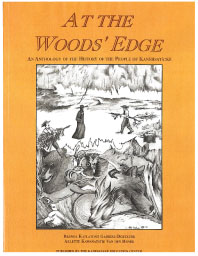
| An anthology of the history
of the people of Kanesatake |
Being tied to a culture that has undergone cultural genocide is detrimental to a person's identity. Sonia experienced this in her childhood, as she shared in her documentary. The kids at her school were uncensored in their comments around her. She heard racist remarks, but she didn’t know how to correct them because she was clueless about her history. This is a result of the Native culture being stripped from the people, and the new generations feel a disconnect to it, but they don’t know why. To help her understand the history of her culture better, Sonia read a book called “At The Wood’s Edge”, written by Mohawk women from Kanehsatake. From reading this book, she gained an understanding of why her culture was being treated the way that it was, and she also felt more of a connection to it. Though there are many other individuals who still do not understand the history of their culture, or feel connected to it because it has been so distanced from them, which shows what sort of affect being tied to an oppressed culture has on an individual.
 |
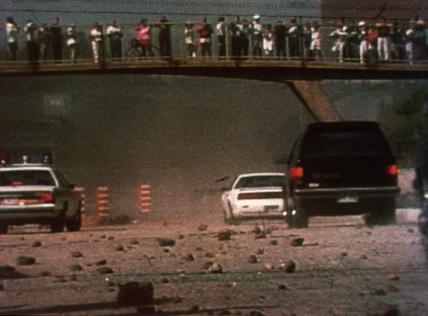
Photo © National Film Board of Canada
(Rocks at Whiskey Trench)
|
I think being part of the oppressing culture can be detrimental an individual as well because they are learning that it is okay to treat others as if they are less than them. They are learning an ethnocentric view, and that is unhealthy for them as individuals, and unfair those who they are oppressing. During the Oka Crisis, there were Mohawk people who were trying to escape the conflict, and while they were doing this, people were throwing rocks at their car, as shown in the documentary. These people throwing rocks seemed to believe that it was okay to abuse these Mohawk people, as the police did nothing to stop them. This tells the people what they are doing is not wrong because they were getting away with it while the police stood by and watched. The rock throwers didn’t understand the history of these natives because it was never taught to them, so they likely grew up treating them with disrespect as they have been for years. This demonstrates how being tied to the oppressing culture is detrimental, because the people a part of it are blinded by the hate and biases they have learned, and they refuse to recognize that these people do not deserve to be treated this way. The culture you are a part of affects the values you hold, so it is important to learn from other cultures to better your understanding and relationship with those individuals. This it not to say what these people did to the Mohawks, and how Natives have been treated, is justified; it is just to say that one culture oppressing another can be detrimental for individuals in each.
Overall, the events in the documentary “The Oka Legacy” demonstrate how being tied to a culture can be detrimental to an individual.
Works Cited
Kanehsatake Voices. www.kanehsatakevoices.com/category/store/.
Marshall, Tabitha. “Oka Crisis.” The Canadian Encyclopedia, 11 July 2013, www.thecanadianencyclopedia.ca/en/article/oka-crisis/.
“The Oka Crisis Legacy.” Eye on Canada, www.eyeoncanada.ca/film/details/the-oka-crisis-legacy.
The Oka Legacy. Directed by Sonia Bonspille-Boileau, 2015.
“Rocks at Whiskey Trench.” Canadian Women Film Directors Database, femfilm.ca/film_search.php?film=obomsawin-rocks&lang=e.

No comments:
Post a Comment